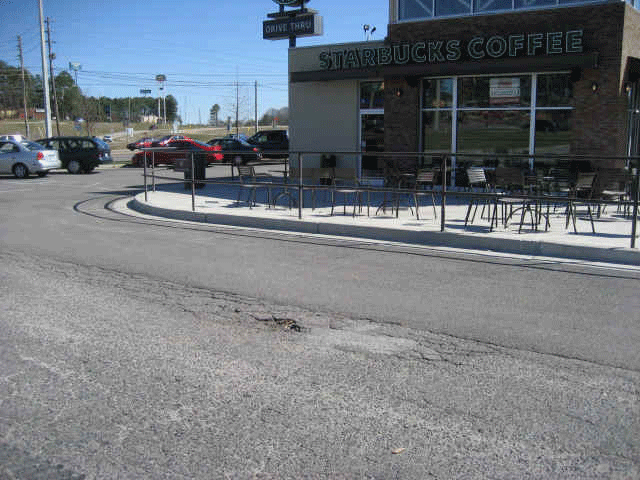
Guardrail Installation in Augusta, GA

Guardrail helps define traffic edges and protect vulnerable areas around commercial, institutional, neighborhood, and municipal properties. We install guardrail in the Augusta area for applications such as bridge approaches, church and school driveways, parking areas, loading zones, and roadway shoulders, either as a standalone scope or alongside a larger fencing project.

Where Is Guardrail Commonly Used?

Guardrail is not limited to highways. It can provide a clear physical boundary anywhere vehicles move near a drop, structure, pedestrian area, drainage feature, or piece of equipment. We commonly discuss guardrail with general contractors, property managers, HOAs, schools, churches, commercial owners, and municipal representatives.

  • Neighborhood and private bridge entrances
  • Church, school, and daycare driveways
  • Parking-lot and parking-deck edges
  • Loading areas and service drives
  • Commercial entrances and internal roadways
  • Road shoulders and municipal sites where the project specifications call for guardrail

Every location is different. The plans, governing requirements, soil, grade, drainage, vehicle path, and nearby utilities all affect what can be installed and how the work should be sequenced. We confirm the actual scope before quoting instead of treating guardrail as a one-size-fits-all product.

Why Combine Guardrail With Commercial Fencing?

Many sites need more than one kind of boundary. Guardrail manages vehicle movement, while fencing may control pedestrian access, secure equipment, screen service areas, or define the perimeter. Our commercial fence installation services include guardrail, chain link, ornamental steel and aluminum, wood and vinyl screening, and heavy-duty gate systems.

When one project includes guardrail, perimeter fencing, and gates, coordinating them under the same scope can reduce conflicts at transitions. We can plan how the systems meet at entrances, corners, slopes, and access points, then schedule the work around paving, grading, landscaping, and other trades.

What Do We Review During a Site Visit?

Plans and intended function

We begin with what the guardrail is expected to do and any plans or specifications already prepared for the project. A commercial parking edge is not automatically the same as a municipal roadside application. When an engineered or public specification controls the work, that document guides the material and installation requirements. For roadway or vehicle-impact protection, the project engineer or responsible authority should establish the required guardrail system, performance criteria, and end treatments before installation.

Alignment, grade, and endpoints

The installation must follow the site while maintaining the specified alignment. We review slopes, curves, transitions, end treatments, entrances, and the locations where guardrail meets fencing or other structures. These details affect both function and the finished appearance.

Soil, drainage, and utilities

Augusta-area sites range from established paved properties to new construction with active grading. We look for drainage paths, retaining walls, underground utilities, compacted areas, and changes in elevation that may affect post placement or access.

Construction access and sequencing

On an active construction site, timing matters. Posts cannot go where final grades, curbs, paving, or utility work are still changing. We coordinate the installation point with the project schedule so the guardrail does not obstruct another trade or have to be removed and reset.

How Does Guardrail Installation Work?

After the scope is confirmed, we lay out the run and verify it against the site. Posts are installed at the spacing and depth required by the applicable system or project specification. Rail sections and approved hardware are then assembled, aligned, and checked along the completed run. Where the scope includes fencing or a gate, we coordinate those connections during layout rather than improvising them at the end.

A final walkthrough gives the owner, contractor, or project manager an opportunity to review the work against the agreed scope. We want the boundaries, entrances, and transitions to make sense for the people who will use and maintain the property.

Can Existing Guardrail Be Repaired or Replaced?

Vehicle impacts, corrosion, soil movement, construction damage, and changes to a site can leave an existing run bent, misaligned, or incomplete. We can inspect damaged areas and discuss whether the practical scope is a section repair, replacement of posts and rail, or a redesigned run based on the current property layout.

If the site also has damaged perimeter fencing or gates, our fence repair service can address those items as part of the same review. We will not recommend patching a section when the supporting structure or surrounding layout makes that repair unreliable.

Where Do We Provide Guardrail Installation?

We work throughout Columbia County, Richmond County, and the broader CSRA. Our core service area includes Evans, Martinez, Grovetown, and Augusta. We also work in surrounding Georgia and South Carolina communities when the project is within our service area.


Ready to Get Started?

If your plan calls for guardrail, request a free estimate so we can review the drawings, site conditions, access, and installation schedule.

Frequently Asked Questions: Guardrail Installation in Augusta, GA

Yes. We install guardrail for commercial and municipal applications in Augusta and across the surrounding CSRA, including bridge entrances, driveways, parking areas, and roadway-related sites.

Yes. We can coordinate guardrail with commercial fencing, gates, screening, and other perimeter work so transitions and project timing are planned together.

Yes. Bring the available plans, specifications, bid information, and target schedule to the site review. We will compare those requirements with field conditions before preparing the scope.

We can assess vehicle-damaged guardrail and determine which posts, rail sections, hardware, and adjoining areas need attention. The repair recommendation depends on the extent of the impact and the condition of the remaining system.

Use our contact page or call us to arrange a site visit. Sharing plans, photographs, measurements, and your construction schedule in advance helps us prepare for the review.